Saturday, March 26, 2011

Reformed Ex-Felon or Arminian Ex-Felon?

I can't tell if the New York Times is making a theology joke or not with their headline: "A Reformed Ex-Felon in Trouble Once Again". The article is about Barry Minkow who
has made many names for himself: as a boy-wonder entrepreneur, as a Ponzi schemer who served seven years in prison and then reinvented himself as a fraud-detection specialist, government informant and pastor.

His life took another turn when he was charged Thursday with conspiracy to commit securities fraud against the Lennar Corporation, one of the nation’s largest home builders.
The two churches where he was a pastor, the Community Bible Church of San Diego and The Church at Rocky Peak both have statements of belief on their web sites, but they're too sketchy for me to be able to tell if they are Reformed (which in today's Evangelical argot usually means Calvinist), or Arminian, or something else.

Here's an article from the Baptist Press with some background on the revival (so to speak) of Calvinism in the Southern Baptist Convention and the debate over whether it's a blessing or a scourge.

But even though the Times covered the Calvinist revival a bit in their 2009 Mark Driscoll article, I'm guessing there really isn't a wink from the copy editor in the Minkow headline after all.

If you're wondering where Catholics stand on these issues, I recommend (as I have before), James Akin's article "A Tiptoe Through TULIP".

Friday, March 25, 2011

Berlitz Breakup

I've been brushing up a bit on my German.

The book German Step-by-Step professes to offer "a vocabulary of 2,600 words chosen especially for their frequency of use." It has a relentlessly chipper tone:
With GERMAN STEP-BY-STEP [sic], accent and pronunciation problems are solved forever. There will be no need to fear appearing gauche before a waiter or salesperson, no terror at buying a train ticket or sending back a steak cooked rare instead of medium. You will discover the music and rhythym of language as spoken by those born into the culture and tradition of a nation.
So I was somewhat shocked by this example conversation in the section on when to use the familiar "du" form for "you". It goes south fast:
Verliebte gebrauchen auch die Du-Form.
Lovers also use the "you" (familiar) form.

SIE:
Liebst du mich?
Do you love me?

ER:
Ja, mein Schatz.
Yes, my treasure.

Ich liebe dich sehr.
I love you very much.

SIE:
Für immer?
Forever?

ER:
Wer weiß? Wer kann das sagen?
Who knows? Who can say that?

SIE:
Warum sagst du — „Wer weiß?"
Why do you say — "Who knows?"

Du bist ekelhaft!
You are horrible!

Ich hasse dich!
I hate you!
Next time they talk, they may have to switch from "du" back to "Sie".

Wednesday, March 23, 2011

The Illusionist

I saw The Illusionist Sunday.

My companions didn't like it at all. But really, see this movie for the beautiful visuals and the friendly humor.  Though neither of those things comes across exceptionally well in the trailer below. It's a stunningly picturesque depiction of Scotland, as well as a homage to the then (1950's) vanishing and now vanished world of vaudeville. Like most animation, if you see it, you should do so on as big a screen as you can find.


Seeing this movie on Sunday was the breaking of my resolution to shift money from my movie budget to my book budget (after I spent more than I planned on books on Saturday). But my companions had between them seen almost every other non-obscene movie playing in Midtown and besides the MPAA was warning that the film contained smoking, which is often a good sign (e.g. Thank You For Smoking or Goodnight, and Good Luck).

There's apparently a big scandal about how and whether the "shooting" script and the final film with its publicity materials departs from the original script and does or does work as an apologia (and/or apology and/or apology) for screenwriter Jacques Tati's behaviour towards his illegitimate daughter and/or his younger daughter. (That's a confusing sentence, but the dispute is very much an unsettled one.)

I came to the movie without knowing about all this controversy.  There's some further confusion about the plot, probably partly because the style of the film is to have very little dialog and what little there is is mumbled and often in French or Gaelic. According to the publicity materials:
THE ILLUSIONIST is a story about two paths that cross. An outdated, aging magician, forced to wander from country to country, city to city and station to station in search of a stage to perform his act meets a young girl at the start of her life's journey. Alice is a teenage girl with all her capacity for childish wonder still intact. She plays at being a woman without realizing the day to stop pretending is fast approaching. She doesn't know yet that she loves The Illusionist like she would a father; he already knows that he loves her as he would a daughter. Their destinies will collide, but nothing – not even magic or the power of illusion– can stop the voyage of discovery.
But Roger Ebert read the plot somewhat differently:
The story involves a magician named Tatischeff [Tati's full last name--SJH] who fails in one music hall after another and ends up in Scotland, where at last he finds one fan: A young woman who idealizes him, moves in with him, tends to him, cooks and cleans, and would probably offer sex if he didn’t abstemiously sleep on the couch.
Well, I can see why the family is upset about that movie if it's also about Tati's relationship with his daughters.  I thought of all the controversy when I read Jennifer Reeser's poem "Despair" in this month's First Things. While the poem is in the 2nd person and I can separate the authorial voice from the author, I'd feel awkward to be her daughter right about now.

Tuesday, March 22, 2011

Saturday in New York (Not the Fourth of July)

Down at St. Michael’s, the Russian Catholic (they might say Russian Orthodox in union with Rome) Church in SoHo, they don’t give up “Alleluia” for Lent—at least during vespers.

After the service ended, I headed a couple blocks down and across Mulberry Street to McNally Jackson Books, an independent bookstore, where I bought three books and left resolving (pace Walker Percy) to go to the movies less frequently to make up for the extravagance. I’ve gotten better at going to the library, but am not any better at returning the books on time. The price advantage over buying books slips away with my impressive ability to rack up late fees. (I'm so good at racking up that I could get a job as a set dresser on The Hustler.)

But returning to the checkout counter at McNally Jackson: the clerk ventured that I had made three fine choices. Flattery will get you everywhere, sir! Truly, I’ve lost his exact words, but they left the impression that it was more than just a case of “The customer is always right.”

It helped though that two of the three were from their recommended picks table, though in one case that was just a coincidence. They were recommending the collected poems of Elizabeth Bishop, which I was coincidentally seeking out. The latest New Criterion reviews an exhibit of the poet’s paintings at James S. Jaffe Rare Books, so I was looking to refamilarize myself before heading up to see them, maybe this weekend.

We read through Geography III in high school. Poems, as the collected works is called, fell open to one of the verses originally collected in Geography III:
In the Waiting Room
In Worcester, Massachusetts,
I went with Aunt Consuelo
to keep her dentist's appointment
and sat and waited for her
in the dentist's waiting room.
It was winter. It got dark
early. The waiting room
was full of grown-up people,
arctics and overcoats,
lamps and magazines.
My aunt was inside
what seemed like a long time
and while I waited and read
the National Geographic
(I could read) and carefully
studied the photographs:
the inside of a volcano,
black, and full of ashes;
then it was spilling over
in rivulets of fire.
...
I love this poem, because it recalls for me so strongly an experience that was part of my childhood, the early darkness of winter afternoons in New England.

The clerk wanted me to know that Poems is part of a publishing project from FSG that also includes a Elizabeth Bishop and The New Yorker: The Complete Correspondence—the power of the independent bookstore with clerks who are encouraged to be knowledgeable about books and urged to sell them intelligently. Amazon.com, actually suggests the same thing, but a visit to a brick and mortar Barnes and Noble wouldn't have.  That book is going on the long-term reading list, the scales tipped for the reason the clerk suggested, insight into the editorial workings of the New Yorker during the years Bishop published there.

Not from the recommendation table was another copy of Noli Me Tangere. I’m on about page eighty and my copy disappeared a week ago into the maw of the LIRR. I’d previously tried to replace it at the Strand, but, if you go to the Strand looking for something in particular, you’re not all that likely to find it, though you may go home with three or four other unrelated things.

But I haven't made any more progress through Noli, because I've been distracted by the other book I bought from the recommendation table: The Long Ships by Frans G. Bengtsson.  Michael Chabon's charming introduction was also published in The Paris Review. Their staff picks pushes a metaphor way to hard in describing the book. I can go with calling it a Viking Hustle and Flow, but Peter Conroy sums up, "After all, it's hard out here for a thane." Ouch.  The new paperback edition from New York Review Books Classics.

After my book binge, I had dinner at Two Boots, something I've somehow managed to miss in my (wow, as of last month, now six years) living in New York City.  Their pizza has a cornmeal dusted crust, which I actually like, but they're much too fond of putting chicken on pizza, something I find entirely inexplicable.  In fact, that and their "funky" decor were probably the two reasons I hadn't eaten at one of their branches already.  But, they manage to serve tasty pizza by the slice that is actually hot, a common failing, so I expect I'll be back again.

The books over movies resolution lasted only slightly more than 24 hours, as a forthcoming post about Sunday will recount.

Saturday, March 19, 2011

Rudolf Buchbinder Votes Against "Authenticity" Before He Votes For It

Stuart Isacoff profiles Viennese pianist Rudolf Buchbinder in Thursday's Wall Street Journal. The article's pull quote was the bolded part of this paragraph:
But fitting together, in Mr. Buchbinder's view, never means compromising a personal vision. "When you grow up in Vienna," he explains, "you feel lucky, because you believe you are in the musical center of the world—the home of Haydn, Mozart and Beethoven. Yet the only reason this music is still alive after hundreds of years is that there is no such thing as 'an authentic' interpretation. If there were, the music would be dead. Take a sample of recordings of Beethoven's Fifth Symphony by 10 conductors, and they will all be different. You can't say there is one right way."
Fair enough, but this later paragraph puts a different spin on things:
... Mr. Buchbinder also likes to play music by George Gershwin, though he won't play the "Rhapsody in Blue" with orchestra, because the composer didn't write it for those forces.
Wait. So there's no such thing as authenticity, but he won't play an orchestra arrangement of Rhapsody in Blue, because Gershwin didn't write it for those forces. That seems like a concern about authenticity to me or something very close to it.

What Students Should Learn in College

This is a finished version of a post first drafted in 2005.  On the way are posts about some of the books I've been reading this month.

K. Anthony Appiah in Slate on what students should learn in college:
I've been on committees at a couple of great universities charged with the task and, putting aside the political difficulties (which I guess you can do, if you have a magic wand) you come to see it's one of those problems you can't solve, only manage. Here's the basic dilemma: If you say that a general education should teach you all the stuff worth knowing, there's far too much to fit around a major in a four-year education. If you say, on the other hand, that it should teach you only the essentials, there's too little. You can live a perfectly decent life with what you have to know just to get out of high school; indeed, many people do.
That dilemma is why you can't put aside the political and, more broadly, the philosophical.  Prof. Appiah has settled on a combined platform of equipping students with mathematical tools to participate in the policy debates of society and also broadening them beyond a parochially national perspective.  Call it technocratic cosmopolitanism.  Dude, at least it's an ethos.

But, it is an ethos.  This is a solution to a philosophical problem.   Assuming the purpose of teaching is to improve students' lives, answering the question, "What should a university teach?" requires answering the question, "What is the good life?" or "How shall we live?"  When we seek to answer that question in a communal context, like a university, and act on our answer, we're also engaging in politics.

But seeking to set aside the political, which in our society almost always involves setting aside normative philosophical judgments, prevents us from judging the solution in the proper context.

Some colleges judge knowledge of the Bible to be more important than courses in statistics or a junior year abroad.  If he hadn't set aside the political and, by implication, normative philosophical considerations, Prof. Appiah might be able to persuade them.

Bonus Big Lebowski/Walter Sobchak/Slate content: "Walter Sobchak, Neocon: The prescient politics of The Big Lebowski".

Friday, March 18, 2011

The Melodica

There was a melodica player on the subway last night.

The melodica has all the irritation of the accordion with none of the charm.

But check out James Howard Young's multi-tracked melodica project:


For all your melodica needs, Melodicas.com appears to be pretty comprehensive.

Thursday, March 17, 2011

St. Patrick's Day

“Ut Christiani ita et Romani sitis.”

“As you are children of Christ, so be you children of Rome.”

Ex Dictis S. Patricii, Book of Armagh, fol. 9

The County Mayo Association with a statue of Our Lady of Knock at the 2010 Philadelphia St. Patrick's Parade (Photo by Jeff Meade from Flickr under a Creative Commons Attribution License)

Wednesday, March 16, 2011

Does the Phil Care About Selling New Music?

I got a marketing e-mail today from the New York Philharmonic pitching the 2011-2012 season.


Since taking the podium at the New York Philharmonic, Alan Gilbert has been noted for his promotion of new music (or at least "newer" music). The Times (of London) wrote in January 2010:
For the moment, however, Gilbert resembles a more controversial figure in the orchestra’s past. Pierre Boulez enjoyed confronting the world’s most conservative audiences with the world’s most modern music, resulting in a string of critical successes and box-office failures. Since then new music has been kept at arm’s length. Until now.

“New music wasn’t presented in the best possible light in the past,” Gilbert admits. “It wasn’t clear why the orchestra was playing it or whether the orchestra really believed in it.”

The “Boléro effect”, as he calls it, which says that if you put a piece such as Ravel’s Boléro at the end of a programme you can slip anything else in earlier in the evening, was all too common. “You may be able to get people to buy tickets this way, but the clear message it sends out is that we don’t really believe in this,” he says. “It says: ‘Deal with it and we’ll get on to the fun stuff later.’ That is not a message we believe in.”
Which brings us back to the marketing e-mail. It leaves me with the impression that the new music is backed with something less than the full faith and credit of the New York Philharmonic. The Phil's Phlacks write:
The new 2011-12 season of Alan Gilbert and the New York Philharmonic has been announced! It is no less than a feast of musical masterpieces — three Mahler symphonies, a festival of Beethoven symphonies, Mozart’s Mass in C minor, and much more — plus exciting premieres from the composers of today.
If new music is important, it's important enough to give us a name. "Exciting premieres"? This breaks the basic rule of writing: Show don't tell. Who are these exciting new composers? The copy doesn't persuade me. If the composers' names aren't worthy to stand alongside Mahler, Beethoven, and Mozart in the marketing e-mail—not as equals necessarily, but at least with a second billing that mentions their names—why should we be excited about them?

As for myself, I'm hoping to hear them do Leos Janácek's The Cunning Little Vixen in June.

Tuesday, March 15, 2011

America's Newspaper of Record


...that's the New York Post, for those of you not up on your John Derbyshire sobriquets.

Here's a couple recent oddities from its hallowed Hamiltonian pages.

Today's Classroom Extra (no link) is a short biography of Albert Einstein. Suggested classroom activities include, "Write a report explaining Einstein's theory of relativity." I'm sure the kids will get right on that!

Last Week's Post included Page Six Magazine featured an article, "When Preppy Weds Hippie". If I told you the article was about Lauren Bush, Princeton graduate, granddaughter and niece of presidents, product of a high school the local Chronicle called "one of Houston's most exclusive prep schools", you'd probably ask, "So who's the hippy?"

But no, she's the hippy. The prep is David Lauren, son of the Polo Ralph Lauren founder.

There's a whole discussion to be had about whether Polo Ralph Lauren is really preppy or is just an appropriation of a culture or even a parody. But, we'll leave that as an exercise for the reader.

Saturday, March 12, 2011

Not exactly...

Fr. Thomas Kocik wrote a post recently on the New Liturgical Movement about a proposed audio-book style version of the Latin Nova Vulgata.

This strikes me as an odd and not particularly useful project in this post-Summorum Pontificum world.
Vatican Press, in partnership with Faith Comes By Hearing (a non-profit, donor-driven, interdenominational ministry committed to the mission of reaching poor and illiterate people worldwide with the Word of God in audio), is preparing to record the Latin edition of the New Testament, the Neo-Vulgate,
A Latin edition. More on this below.
for use in Catholic seminaries, parishes, and personal individual study worldwide. The Neo-Vulgate is currently the official or "typical" Latin edition published by the Catholic Church for use in the Roman Rite. As the first vernacular translation of the Bible, it is only fitting that it be among the languages in which Faith Comes By Hearing makes Sacred Scripture available in audio using the rendering of the translator, St. Jerome (342–420 A.D.).
What? Jerome did two translations of the Bible into Latin. The Neo-Vulgate is not either of them. It's a new edition. Hence the "neo" or "nova" in the name.
It will also be available for free download onto technology devices for academic and devotional use.
Those of us who are regularly worshiping in Latin and studying the Latin scriptures for that purpose are overwhelmingly not using the Nova Vulgata, but the 1962 missal versions. Serious academics working on Biblical studies are only using the Latin (they use the Greek and the Hebrew) if they are doing specialized historical studies on previous interpretation (e.g. editions of sermons written by those who used the Vulgate). But they're not using the Nova Vulgata for these studies either.
The Latin Vulgate is the substratum for the prayers of the Roman liturgy and offers the spiritual milieu for it. I ask you to consider giving this worthwhile project your prayerful and financial support. To hear, as well as to read, the Holy Scriptures in Latin – the first language into which the original Hebrew and Greek were translated – would be a fine source for reinforcement of biblically grounded faith and cultural enrichment.
There's a historical error here too.  The first language into which the original Hebrew of the Torah was translated wasn't Latin, but Aramaic and then later the Greek Septuagint.

Friday, March 11, 2011

A Life at the Track is built from Days at the Races


I've just finished reading Ted McClelland's Horseplayers: Life at the Track.

I live right near Aqueduct, though I've never made it out there, but I have been to the summer meet at Saratoga once.

The book is well done, but it betrays its origins as an edited and reworked version of newspaper columns (even though he had a book contract already while the columns were being written.) The profiles of the people he meets at the track don't go as deep as you might like: newspaper column depth rather than magazine column or book depth. The same book suffers from the same difficulty as a memoir or as participatory journalism, never digging as deep into the authors psyche as a book like Ted Conover's Newjack: Guarding Sing Sing. Of course, Newjack wasn't Conover's first rodeo as Horseplayers seems to be for McClelland. I'll be keeping an eye out for a sophmore effort.

I discovered the helpful glossary at the back only when I had finished the book, but there was still no entry there for exacta! (I used the internet to look it up.)

One more thing about reading Horseplayers: a little more knowledge about handicapping gives me a sharper appreciation for this bit from A Day at the Races:


Thursday, March 10, 2011

So Good It's Bad


Dana Stevens writes in Slate about Love Guru:
There are good movies. There are bad movies. There are movies so bad they're good (though, strangely, not the reverse).
I'm not so sure this is true.  Basically, the point here is that there multiple meanings for the words "good" and "bad".

But given this fact, aren't there all sorts of movies so "good" they're bad? Think, for instance of "morally improving" movies.  Pauline Kael has an interesting comment about this in Afterglow: A Last Conversation With Pauline Kael:
[T]hey thought I was awful for panning the kind of movies I panned, the earnest movies, what's now called the independent film—the movies that have few aesthetic dimensions but are moral and have lessons and all. There was a great deal of sentiment for that kind of movie at The New Yorker, and from its readers. This was, after all, in the sixties and seventies, and New York was still full of a lot of refugees from Hitler, and they took movies very seriously, and morally. And my frivolous tone really bugged them. ...

Today, there's so much more of a feeling for films as aesthetic objects rather than as morally improving objects. But I was writing for a magazine that stood for moral improvement—New Yorker editorials during my years there could be so abstractly moralizing. There were things there that were so at odds with what I was doing that it amazes me that I lasted.
That captures the point, I think. A certain kind of moral movie could be called "so good it's bad."

I'm not sure if Kael intended to contrast taking movies seriously with appreciating them as aesthetic objects. Can't we take seriously aesthetic objects, even if they don't have "messages" attached? It's also interesting to think about how the "independent" label has broadened since Kael said this. Certainly today, plenty of what are called independent films are aesthetically focused, rather than message films. I'm not sure this wasn't even the case when Kael wrote the above.

This post was started in 2008, I don't run around the 'net searching for reviews of bad old Mike Myers movies, but I did want to clean up some of the drafts still lingering on Blogger. Finishing up this post makes me miss my former coworker and friend CeOtis Robinson, who definitely would have loved discussing this question.

Tuesday, March 08, 2011

Essays About Latin

Professor Emeritus William Harris of Middlebury college has a great collection of essays on studying, translating and appreciating Latin.

How Many Roman Missals Do We Need?

Responding to a post on the NLM about Midwest Theological Forum's plans to publish an edition of the new English Missal, Fr. Franklyn McAfee commented:
I hope they also will do an edition of the Missale Romanum (1962).
This got me thinking. Between the Benzinger reprint from PCP and the Vatican edition we're pretty well situated for 1962 Missals at this point, if perhaps not so well situated that another edition wouldn't be a good thing.

And anyways, what's the harm in another edition? Actually, there is a downside: economies of scale.  The balance on the 1962 Missal might still tilt towards additional editions.  I'm not as convinced that we need as many editions of the new missal as have already been announced.

While I'm glad we have other art choices than those of the Liturgical Press edition, is the difference between the Midwest Theological Forum edition and the Magnificat edition going to be worth the increased price of both missals?

Now, is there anything we can do about this? Unless we're liturgical publishers, probably not. Centralized control probably wouldn't work any better. But liturgical publishers should try to make sure they're offering something different from what the competition is offering and not just multiplying their offerings uselessly and wasting everyone's money and time.  Newman House Press apparently has plans for a Latin/English Missale parvum, which sounds interesting.

Saturday, February 26, 2011

Ollie's Noodle Shop &c.

I'd been jonesing for some roast pork and won-ton soup for a couple weeks. So I head over to Ollie's Noodle Shop near Lincoln Center.

The food was it's usual tasty, but not haute self. But I love the scenery of eating there, that is the other diners.  Most of the time, this is compounded by your being packed in nearly check to jowl with them.

On a previous trip, Skipp Sudduth (of Third Watch and who I saw in South Pacific) was at the next table.

Tonight, well it's hard to explain. I was sitting next to two teenage boys who were talking about (among other things):

  • Whether they could whistle/raise one eyebrow/roll their tongues/and a long list of other "genetic abilities"
  • Whether women could make them laugh (one said yes, the other said no)
  • Why girls did or didn't like them
  • How one guy's father always talked to him like he was the audience for his father's podcast!
Hmm, I'm not sure it comes across on the page. (The screen?) But it was all I could do to keep my head in my newspaper and not stare and laugh.

It's the first time I've been up here since the Lincoln Center Barnes and Noble closed.  R.I.P.  Also, the 7 o'clock showing of Of Gods and Men at the Lincoln Plaza Theatre was sold out an hour before showtime, which augers well for the prospects of the film.  America needs more monastic witness.

As I walked by the Mormon Temple up there, I peeked in the glass at the side of the doors.  I'd walked by before, but never thought to do that!  You could see the folks walking around inside in their all white temple garb.  The aforementioned Barnes and Noble had a huge section on Mormonism, which puzzled me until I spotted the (relatively understated) temple across the street.

Saturday, January 15, 2011

The Big Fear

David has the Big Fear. It doesn’t take a cabdriver too long to realize that once you leave the joy of shape-up and start uptown on Hudson Street, you’re fair game. You’re at the mercy of the Fear Variables, which are (not necessarily in order): the traffic, which will be in your way; the other cabdrivers, who want to take your business; the police, who want to give you tickets; the people in your cab, lunatics who will peck you with nudges and dent you with knives; and your car, which is capable of killing you at any time. Throw in your bosses and the back inspectors and you begin to realize that a good night is not when you make a living wage. That’s a great night. A good night is when you survive to tell your stories at tomorrow’s shape-up. But all the Fear Variables are garbage compared with the Big Fear. The Big Fear is that times will get so hard that you’ll have to drive five or six nights a week instead of three. The Big Fear is that your play, the one that’s only one draft away from a possible show-case will stay in your drawer. The Big Fear is thinking about all the poor stiff civil servants who have been sorting letters at the post office every since the last Depression and all the great plays they could have produced. The Big Fear is that, after twenty years of schooling, they’ll put you on the day shift. The Big Fear is you’re becoming a cabdriver.
Mark Jacobson, New York Magazine, Sept. 22, 1975

Saturday, January 01, 2011

Christmas Trees Still Selling

Obviously, it's a mistake to still have a big stock left over, but a Christmas tree seller in Queens discovered a new market for after December 25 (Gregorian), the Russian Orthodox!
The trees are still, slowly selling — Mr. Choi sold two on Wednesday to some customers who were Russian Orthodox and celebrating Christmas on Jan. 7. But really, Mr. Choi said he was trying to figure out how to dispose of them. He said he did not gauge the economy correctly and would be more careful next year.

Thursday, December 30, 2010

Give 'Em The Pickle!


Starbucks is doing its job "giving the pickle" tonight. The guy ahead of me in line got a tall cappuccino with a cup of whipped cream on the side. Then when he got his drink he asked for whipped cream on top. They didn't charge him extra for any of it.

Mmmm... pickles and whipped cream.

Friday, December 17, 2010

Overheard

Earlier this week, when we had gotten the first snow of the year that "stuck," I heard a teen girl say to her friend, "I hate snow. It's so boring." Well, here in New York, where most people don't drive, it's probably true that the visual effect is more heightened and the excitement of trying to stay on the road is less critical.

Thursday, December 16, 2010

Scene: a Deli in Jamaica, N.Y.


Interior, Night
Sam: Do you have toothbrushes.
Counterman: Yes.
puts hot pink toothbrush on counter
Sam: Do you perhaps have a different color
Counterman: Sure, how's this one.
puts yellow toothbrush on counter
Sam: Thanks, that's slightly more manly.
fade out

Tuesday, December 14, 2010

Why You Can't Wear Dress Boots

From Esquire:
Could you recommend some winter dress boots that are stylish and waterproof?

No, Jeremy, I will not recommend you a dress boot. Because you are not Errol Flynn and this is not the Spanish Main. What you need is a practical pair of rubber Wellingtons, which allow you to march to work through slush ponds without so much as breaking stride.
However, if you are friends with Errol Flynn, you can wear a monocle and roll your r's while singing Garry Owen.

Saturday, December 11, 2010

Actually, They're Not In the Opera

The New York Times article on the opening night at La Scala featured this terrific picture of Italian police officers.  No, they're not in the opera, they're "[a] horse patrol facing hundreds of protesters in front of La Scala on Tuesday, opening night."  The cops over there certainly know how to dress. There were other officers on hand with more practical riot gear.

Sunday, December 05, 2010

A Very New York Conversation

Buying pseudoephedrine at the drug store, the clerk asks not "Can I see your driver's license?" like they do most places, but "Can I see your state ID or driver's license?"

Saturday, December 04, 2010

A Different Spin on "Keeping Christ in 'Christmas'"

The Christmas season is a great time to think about those who do not have Christ. As I've been decorating my tree and listening to Christmas music, I think of what a colossal letdown Christmas must be for those who don't have Christ as the center of their celebration.

I mean, how long can you sustain excitement about shopping, food, decorations, gifts and parties? Come January, all those things are gone, and in their place are bills, trash, gift receipts and a 5-10 pound weight gain.
Lisa Anderson writing in the Boundless Update from Focus on the Family

Tuesday, November 30, 2010

"Distrahit animum librorum multitudo." --Seneca

"I had nearly five thousand volumes in my library at Rome; but after reading them over many times, I found out that with one hundred and fifty well-chosen books a man possesses, if not a complete summary of all human knowledge, at least all that a man need really know. I devoted three years of my life to reading and studying these one hundred and fifty volumes, till I knew them nearly by heart; so that since I have been in prison, a very slight effort of memory has enabled me to recall their contents as readily as though the pages were open before me. I could recite you the whole of Thucydides, Xenophon, Plutarch, Titus Livius, Tacitus, Strada, Jornandes, Dante, Montaigne, Shakespeare, Spinoza, Machiavelli, and Bossuet. I name only the most important."
The Count of Monte Christo by Alexandre Dumas, père

Friday, November 19, 2010

Gilson: Latin Liturgy and Philosophical Education

From Etienne Gilson's The Philosopher and Theology, published 1962:
Latin is the language of the Church. The sorry degradation of the liturgical texts by their translation into a gradually deteriorating vernacular emphasizes the need for the preservation of a sacred language whose very immutability protects the liturgy against the decay of taste. As his education is thus proceeding in keeping with the spirit of his own tradition, the young Christian imperceptibly becomes familiar with a Latin philosophical terminology (almost entirely Greek in its origin) embedded in the formulas of Christian dogmas. Liturgy itself forces this terminology upon his attention and fixes it in his memory, since he not only hears this language but also speaks it and sings it. Liturgical music permeates the meaning of the words so thoroughly that, thirty-odd years later, he will only have to sing the Preface to himself in order to recall the words: Non in unius singularitate personae, sed in unius Trinitate subsstantiae . . . et in personis proprietas, et in essentia unitas. . . . No mind can ascribe a meaning to such formulas without assimilating something of the philosophical notions they convey. In the liturgy itself, such words as substance, essence, singularity, propriety, person, point out directly and primarily only the mysterious truths contained in Christian dogma. The sentences that these words constitute are not philosophical propositions. Still, even though they do not bind it to any particular philosophy, a mind that has become familiar with them early enough in life will never be able to accept a doctrine that would consider them meaningless. The Church invincibly opposes any philosophical change that would oblige her to modify the received formulation of dogma. And in this the Church is right, for any change in words would entail a change in meaning, and propositions that have for centuries stood the test of councils cannot be altered without religious truth itself being put in jeopardy.
     Thus, long before he begins studying philosophy proper, the Christian imbibes definite metaphysical notions.

Thursday, November 18, 2010

More Horseradish!

Headed to dinner at Wolfgang's Steakhouse.
"There is even a 'Wolfgang’s Steakhouse Old-Fashioned Sauce,' which is a near-exact facsimile of the famous Luger’s Steak Sauce, only it’s slightly sweeter, and contains a touch more horseradish." NY Magazine
Well that settles the question of whether I'll have steak. Remember the Great Horseradish Famine and eat it while you can!

Friday, November 12, 2010

40 years on...

Folks continue to promote the Bayside Apparitions, more than 40 years after the "seer", Veronica Lueken, claimed they began and 15 years after her death. Recently "Our Lady's revelation" that Teilhard de Chardin is in Hell has been trotted out on FaceBook. Let's listen again (via EWTN) to what the Bishop of Brooklyn declared about these apparitions in 1986.
I, the undersigned Diocesan Bishop of Brooklyn, in my role as the legitimate shepherd of this particular Church, wish to confirm the constant position of the Diocese of Brooklyn that a thorough investigation revealed that the alleged "visions of Bayside" completely lacked authenticity.

Moreover, in view of the confusion created by published reports of messages and other literature by this "Movement," I consider it my obligation to offer Christ's faithful pastoral guidance, lest their faith be endangered by "messages" and "teachings" relayed by "visionaries," which are contrary to the Faith of our Catholic Church.

Therefore, in consultation with the Congregation for the Doctrine of the Faith, I hereby declare that:

1. No credibility can be given to the so-called "apparitions" reported by Veronica Lueken and her followers.

2. The "messages" and other related propaganda contain statements which, among other things, are contrary to the teachings of the Catholic Church, undermine the legitimate authority of bishops and councils and instill doubts in the minds of the faithful, for example, by claiming that, for years, an "imposter (sic) Pope" governed the Catholic Church in place of Paul VI.

3. Those who persistently maintain that "no ecclesiastical permission is required for the publication or dissemination" of information concerning "revelations, visions or miracles," are erroneously interpreting the directives of the Holy See when they attempt to justify the publication of the propaganda literature on the "Bayside Messages."

...those publishing or disseminating this propaganda literature are acting against the judgment of legitimate Church authority.

4. Because of my concern for their spiritual welfare, members of Christ's faithful are hereby directed to refrain from participating in the "vigils" and from disseminating any propaganda related to the "Bayside apparitions." They are also discouraged from reading any such literature.

5. Anyone promoting this devotion in any way, be it by participating in the "vigils," organizing pilgrimages, publishing or disseminating the literature related to it, is contributing to the confusion which is being created in the faith of God's people, as well as encouraging them to act against the determinations made by the legitimate pastor of this particular Church (c.212, para. 1).

It remains my constant hope that all the faithful spend their time and energies in promoting devotion to our Blessed Lady, in the many forms which have been approved by the Catholic Church.

+Bishop Francis Mugavero
Bishop of Brooklyn

Thursday, November 11, 2010

The Right Honourable The Earl Russell, OM, FRS

a.k.a. Bertrand Russell, descendant of Thor.

Frank Swinnerton in The Georgian Scene:
Bertrand Russell belongs to one of the oldest aristocratic families in England, which I learn has been traced back as far as the God Thor. His grandfather, the first Earl Russell, was third son of the sixth Duke of Bedford, and Bertrand Russell himself, although it would be unbecoming in him, as a Communist, to use the title, is the third Earl.
Here's the general article on the Earls.  The image at left is of Mårten Eskil Winge's painting Thor's Battle Against the Ettins.

Tuesday, November 09, 2010

Monday, October 18, 2010

L'Osservatore Romano on the Simpsons

Homer e Bart sono cattolici


di Luca M. Possati

Pochi lo sanno, e lui fa di tutto per nasconderlo. Ma è vero: Homer J. Simpson è cattolico. E se non fu vocazione - complice un'ammaliante pinta di "Duff" - ci mancò davvero poco. Tanto che oggi il re della ciambella fritta di Springfield non esita a esclamare che "il cattolicesimo è mitico". Salvo poi ricredersi in un catartico "D'oh!".

La battuta - tratta dall'episodio "Padre, Figlio e Spirito Pratico", in cui Homer e Bart si convertono grazie all'incontro con il simpatico padre Sean - è lo spunto dell'interessante articolo I Simpson e la religione di padre Francesco Occhetta comparso nell'ultimo numero di "La Civiltà Cattolica". L'autorevole rivista dei gesuiti italiani traccia una raffinata analisi antropologica ed etica del cartoon cogliendo al contempo l'occasione - questo l'aspetto più notevole - di dare qualche consiglio pratico a genitori e figli.

È fuori discussione che la serie creata da Matt Groening ha portato nel mondo del cartone animato una rivoluzione linguistica e narrativa senza precedenti. Abbandonata la tranquillizzante distinzione tra bene e male tipica delle produzioni "a lieto fine" della Disney, Homer&Company hanno aperto un vaso di Pandora. Ne è uscita comicità surreale, satira pungente, sarcasmo sui peggiori tabù dell'American way of life e un'icona deformante delle idiosincrasie occidentali. Ma attenzione, ci sono anche altri livelli di lettura. "Ogni episodio - scrive Occhetta - dietro la satira e alle tante battute che fanno sorridere, apre temi antropologici legati al senso e alla qualità della vita" (p. 144). Temi come l'incapacità di comunicare e di riconciliarsi, l'educazione e il sistema scolastico, il matrimonio e la famiglia. E non manca la politica.

Pomo della discordia, la religione. Che dire al cospetto delle sonore ronfate di Homer durante le prediche del reverendo Lovejoy? E che dire delle perenni umiliazioni inflitte al patetico Neddy Flanders, l'evangelico ortodosso? Sottile critica o blasfemia ingiustificabile? "I Simpson - sostiene Occhetta - rimangono tra i pochi programmi tv per ragazzi in cui la fede cristiana, la religione e la domanda su Dio sono temi ricorrenti" (p. 145). La famiglia "recita le preghiere prima dei pasti e, a suo modo, crede nell'al di là" ed è lei il mezzo attraverso cui la fede viene trasmessa. La satira, invece, "più che coinvolgere le varie confessioni cristiane travolge le testimonianze e la credibilità di alcuni uomini di chiesa".

Sia chiaro, i pericoli esistono, perché "il lassismo e il disinteresse che emergono rischiano di educare ancora di più i giovani a un rapporto privatistico con Dio" (p. 146). Ma cum grano salis occorre separare l'erba buona dalla zizzania. I genitori non debbono temere di far guardare ai loro figli le avventure degli ometti in giallo. Anzi, il realismo dei testi e degli episodi "potrebbe essere l'occasione per vedere alcune puntate insieme, e per coglierne gli spunti per dialogare sulla vita familiare, scolastica, di coppia, sociale e politica" (p. 148). Nelle storie dei Simpson prevale il realismo scettico, così "le giovani generazioni di telespettatori vengono educate a non illudersi" (p. 148). La morale? Nessuna. Ma si sa, un mondo privo di facili illusioni è un mondo più umano e, forse, più cristiano.

Tuesday, August 10, 2010

File under: Preferential Option for the Awesome

A series of coincidences led to my taking another look at the Chabad-run site Askmoses.com. A couple of friends of mine are getting married this fall and, partly as a result, this question and answer by Rabbi Moshe Miller caught my eye. The questioner asked, "Why do people throw sweets at the groom [at the synagogue] on the Shabbat [Sabbath] before his wedding?
The candy throwing ritual is known as an "Aufruf."

It is customary to call up (aufruf = the Yiddish word which means to call up) the groom to the Torah on the Shabbat before the wedding. After his portion is read and he has recited the blessing after reading the Torah it is customary to sing and rejoice together with him. The congregation then throws nuts and candies at the groom as a blessing that the couple should be fruitful and have a sweet life together. (The candies are soft so no one will be injured).

I've heard it said that they pelt the young man with bags of nuts and candies so that any hard knocks due to him are already fulfilled by those who love and respect him, and even those have a sweet ending!

According to the Zohar, the blessings for the entire week emanate from the Shabbat beforehand. Furthermore, since Torah is the root of all blessings, we call up the groom to the Torah on the Shabbat before his wedding, to shower Torah-blessings on the auspicious upcoming week.

The entire ancient custom seems to be related to the statement in the Talmud [Berachot 6b] that everyone who brings joy to a groom is worthy of Torah (and this is why it is done when he is called up to the Torah).

After the services, it is customary for the family of the groom to sponsor a sumptuous Kiddush in honor of the soon-to-be-married couple.

The bride does not join the groom’s festivities because the bride and groom do not see each other for an entire week before the wedding. Instead, it is customary for the bride to have a festive gathering for her friends on this same Shabbat. This event is known as the “Shabbat Kallah,” or in Yiddish it is known as a fahrshpil.

Sephardic Jews generally do not observe the aufruf custom.

Saturday, August 07, 2010

Before Cable News

I ran across the following in the 1900 Union League Club annual report. The section of the report related to the Committee on Library and Publications reminded me that this was written during the Philippine-American War and the Second Anglo-Boer War. So what did they do before cable news? Books, serials and maps.
...your Committee unanimously resolved to return to ... expending in the purchase of new books, as distinguished from serial literature of any description, a reasonable proportion of the funds... especial reference has, of course, been had to timely publications, like books on the Philippine Islands and South Africa.

Your Committee feels that mention should here be made of the very beautiful and cartographically accurate maps of the Philippine Islands and of South Africa now posted in the Club-house, which were prepared by the War Department and sent to the Club by the courtesy of the Secretary of War; and also of the map of South African territory procured by the Committee from London. By placing a number of small flags upon these maps to indicate the location of the various troops, and by changing them from day to day, as advances or retreats are made, it has been found that the interest of club members in the different campaigns has been stimulated. This method of illustrating the progress of a war is quite general in the London clubs, but has never before to our knowledge, been used in any New York club.

Tuesday, August 03, 2010

Nelson: Priests, Popes, and Plate

The English hero [Lord Nelson] was thoroughly devoted to the established church of his nation and was a Protestant by both inclination and practice. ... He appreciated the Neapolitans' Catholicism and certainly never let religious differences interfere with his zealous diplomatic efforts to keep Naples on Britain's side in the war. He was always respectful to Catholic dignitaries and went to great lengths to ensure that they knew he would defend their Church and its role in Catholic nations. He also demonstrated tolerance in a number of small-scale ways. For instance, he willingly acceded to a request from the queen of Naples for the discharge of one of Capt. Thomas Masterman Hardy's marines, who was a Catholic priest by training, so that he could serve in her kingdom. And when in 1804 he gave gifts to the Catholic residents of the Maddalena Islands to repay their hospitality, he chose church plate (a silver crucifix and candlesticks) for the local parish, a gesture that prompted the startled parish priest to cut short a trip elsewhere so that he could thank Nelson personally. The priest even promised, in a gushy letter, ever after to offer daily vows for Nelson's long life, prosperity, and glory.

Nelson also bemoaned that the frail and unwell Pope Pius VI, whom he had often hoped would join the war against atheistic France, had been deported to Valence (where he later died). It "makes my heart bleed," Nelson lamented. When the new pope, Pius VII, returned to Rome in 1800, Nelson wrote him a congratulatory letter. He explained that he himself played a part in making the Catholic Italian states safe for the pope's return. "Holy Father," he added, "I presume to offer my most sincere congratulations on this occasion; and with most fervent wishes and prayers that your residence may be blessed with health, and every comfort this world can afford." This was no mere polite letter to a distinguished personage to praise him for good fortune. The letter had a curious religious purpose; the admiral felt compelled to tell the pope that in 1798 a priest had predicted Nelson would, by providing naval assistance, play a key role in Rome's recapture from the French. This had "turned out so exactly," Nelson said, that he felt the pope should know about the "extraordinary" consonance between the prediction and the outcome.

That return to Rome was the one that inspired the Feast and Month of the Precious Blood, as was discussed in a previous post.

Hayward was also caught up in a lengthy debate about his Master's thesis and holocaust denial. See his old web site here.

Tuesday, July 27, 2010

Crying to Heaven for Vengeance

The New York Times runs a story today, "Most Ironbound Day Laborers Report Being Cheated", based on research from Seton Hall University:
Nearly all day laborers who gather for work in the Ironbound neighborhood of Newark have had employers who have either paid them less than promised or not paid them at all ... The report found that 96 percent of the workers reported that they had experienced at least one case of wage theft. Some 88 percent reported that employers had failed to pay them overtime wages, as required by state and federal laws; 77 percent had been victims of underpayment of regular-hour wages; and 62 percent had employers who refused to pay them on at least one occasion.
These employers might want to remember that defrauding laborers of their wages is one of the four "sins that cry to heaven for vengeance":
Behold the hire of the labourers, who have reaped down your fields, which by fraud has been kept back by you, crieth: and the cry of them hath entered into the ears of the Lord of Sabaoth. (James 5:4)

Saturday, July 10, 2010

"I resolved to rise and take a turn in the garden..."

The Fellows' Garden, Lady Margaret Hall, Oxford
Philonous. Good morrow, Hylas: I did not expect to find you abroad so early.

Hylas. It is indeed something unusual; but my thoughts were so taken up with a subject I was discoursing of last night, that finding I could not sleep, I resolved to rise and take a turn in the garden.

Phil. It happened well, to let you see what innocent and agreeable pleasures you lose every morning. Can there be a pleasanter time of the day, or a more delightful season of the year? That purple sky, those wild but sweet notes of birds, the fragrant bloom upon the trees and flowers, the gentle influence of the rising sun, these and a thousand nameless beauties of nature inspire the soul with secret transports; its faculties too being at this time fresh and lively, are fit for those meditations, which the solitude of a garden and tranquillity of the morning naturally dispose us to. But I am afraid I interrupt your thoughts: for you seemed very intent on something.

Hyl. It is true, I was, and shall be obliged to you if you will permit me to go on in the same vein; not that I would by any means deprive myself of your company, for my thoughts always flow more easily in conversation with a friend, than when I am alone: but my request is, that you would suffer me to impart my reflexions to you.

Phil. With all my heart, it is what I should have requested myself if you had not prevented me.

Hyl. I was considering the odd fate of those men who have in all ages, through an affectation of being distinguished from the vulgar, or some unaccountable turn of thought, pretended either to believe nothing at all, or to believe the most extravagant things in the world. This however might be borne, if their paradoxes and scepticism did not draw after them some consequences of general disadvantage to mankind. But the mischief lieth here; that when men of less leisure see them who are supposed to have spent their whole time in the pursuits of knowledge professing an entire ignorance of all things, or advancing such notions as are repugnant to plain and commonly received principles, they will be tempted to entertain suspicions concerning the most important truths, which they had hitherto held sacred and unquestionable.

Phil. I entirely agree with you, as to the ill tendency of the affected doubts of some philosophers, and fantastical conceits of others. I am even so far gone of late in this way of thinking, that I have quitted several of the sublime notions I had got in their schools for vulgar opinions. And I give it you on my word; since this revolt from metaphysical notions to the plain dictates of nature and common sense, I find my understanding strangely enlightened, so that I can now easily comprehend a great many things which before were all mystery and riddle.

Hyl. I am glad to find there was nothing in the accounts I heard of you.

Phil. Pray, what were those?

Hyl. You were represented, in last night’s conversation, as one who maintained the most extravagant opinion that ever entered into the mind of man, to wit, that there is no such thing as material substance in the world.

Phil. That there is no such thing as what philosophers call material substance, I am seriously persuaded: but, if I were made to see anything absurd or sceptical in this, I should then have the same reason to renounce this that I imagine I have now to reject the contrary opinion.

Hyl. What I can anything be more fantastical, more repugnant to Common Sense, or a more manifest piece of Scepticism, than to believe there is no such thing as matter?

Phil. Softly, good Hylas. What if it should prove that you, who hold there is, are, by virtue of that opinion, a greater sceptic, and maintain more paradoxes and repugnances to Common Sense, than I who believe no such thing?

Hyl. You may as soon persuade me, the part is greater than the whole, as that, in order to avoid absurdity and Scepticism, I should ever be obliged to give up my opinion in this point.

Friday, July 09, 2010

Pick Your Battles

Writing on National Review Online, Abigail Thernstrom dissents from the general fury at the Justice Department over their handling of the New Black Panther Party voter intimidation case.
...it is very small potatoes. Perhaps the Panthers should have been prosecuted under section 11 (b) of the Voting Rights Act for their actions of November 2008, but the legal standards that must be met to prove voter intimidation — the charge — are very high.

In the 45 years since the act was passed, there have been a total of three successful prosecutions. The incident involved only two Panthers at a single majority-black precinct in Philadelphia. So far — after months of hearings, testimony and investigation — no one has produced actual evidence that any voters were too scared to cast their ballots. Too much overheated rhetoric filled with insinuations and unsubstantiated charges has been devoted to this case.

A number of conservatives have charged that the Philadelphia Black Panther decision demonstrates that attorneys in the Civil Rights Division have racial double standards. How many attorneys in what positions? A pervasive culture that affected the handling of this case? No direct quotations or other evidence substantiate the charge.

Thomas Perez, the assistant attorney general for civil rights, makes a perfectly plausible argument: Different lawyers read this barely litigated statutory provision differently. It happens all the time, especially when administrations change in the middle of litigation. Democrats and Republicans seldom agree on how best to enforce civil-rights statutes; this is not the first instance of a war between Left and Right within the Civil Rights Division.

...

A disaffected former Justice Department attorney has written: “We had indications that polling-place thugs were deployed elsewhere.” “Indications”? Again, evidence has yet to be offered.

Get a grip, folks. The New Black Panther Party is a lunatic fringe group that is clearly into racial theater of minor importance. It may dream of a large-scale effort to suppress voting — like the Socialist Workers Party dreams of a national campaign to demonstrate its position as the vanguard of the proletariat. But the Panthers have not realized their dream even on a small scale. This case is a one-off.

There are plenty of grounds on which to sharply criticize the attorney general — his handling of terrorism questions, just for starters — but this particular overblown attack threatens to undermine the credibility of his conservative critics. Those who are concerned about Justice Department enforcement of the Voting Rights Act should turn their attention to quite another matter, where the attorney general has been up to much more important mischief: his interpretation of the act’s core provisions.
Read the whole article at NRO.

Thursday, July 08, 2010

Video and Audio from the Met Museum

The inanity of Youtube comments is legendary, but this one is pretty high up there:
i went to see this this past weekend.. was prob the most interesting part of the whole museum..
The "this" in question? The current Picasso exhibit at the Metropolitan Museum of Art. It's a comment on Thomas Campbell and Gary Tinterow's video tour of the exhibit. There's so much at the Met. This is not the most interesting thing going on there! It's not even that special as an exhibition of Picasso's work, being a show just of works already in the Museum's collection.

On a recent visit, I found Side by Side: Oberlin’s Masterworks at the Met to be particularly fascinating. More on that in a future post, I hope.

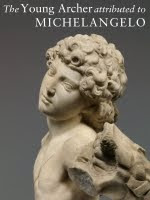
But first, here's a bit of media from the Met's web site that I did really like. In an MP3 podcast, curator James Draper discusses Michaelangelo's "Young Archer": how it was rediscovered and how it ended up on display at the Met.

Somewhat Surprised He Stuck Around

Wow. Bill Buckley tears into Norman Mailer in his introduction to their interview in this episode of Firing Line.


This Youtube playlist has all six parts.

Friday, July 02, 2010

Why July?

Why is July 1st the Feast of the Precious Blood?

"Fr. Hunwike's Liturgical Notes" has the answer, which I had forgotten, if I ever knew it:
...surely one of the most crass examples of the Hermeneutic of Rupture incarnated in the Bugnini 'reforms' [was] ... when, with immense cynicism, the 'reformers' reduced July 1 to a feria on the flippant grounds that the Precious Blood would get a perfectly adequate 'covering' by being merely added to the title of Corpus Christi. Thus a nice piece of Pius IX liturgy disappeared: the memorial he placed on the calendar to commemorate his return to the City after the Roman Revolution of 1848. There is nothing vulgar, incidentally, about doing that sort of thing to the calendar, or, if there is, it is simply the vulgarity of an incarnational religion.
Pius IX assigned the feast to the first Sunday in July, Pius X moved it to July 1 as part of his effort to put back into use Sunday Masses of the Roman Missal that were frequent impeded.

Monday, June 28, 2010

I love that Armond White...

...just doesn't care what other people think about him.  Or maybe he does.  But he certainly doesn't care a lot about what the Masses think about him.  I don't agree with everything in his review of Toy Story 3 (which movie I rate O.K., not good, and certainly not great.)

Of course, he makes me love him right off the top by referencing a Whit Stillman film:
Pixar has now made three movies explicitly about toys, yet the best movie depiction of how toys express human experience remains Whit Stillman’s 1990 Metropolitan. As class-conscious Tom Townsend (Edward Clements) tries fitting in with East Side debutantes, he discovers his toy cowboy pistol in his estranged father’s trash. Without specifying the model, Stillman evokes past childhood, lost innocence and Townsend’s longing for even imagined potency.

Here's some more:
Look at the Barbie and Ken sequence where the sexually dubious male doll struts a chick-flick fashion show. Since it serves the same time-keeping purpose as a chick-flick digression, it’s not satirical. We’re meant to enjoy our susceptibility, not question it, as in Joe Dante’s more challenging Small Soldiers. Have shill-critics forgotten that movie? Do they mistake Toy Story 3’s opening day for 4th of July patriotism?

When Toy Story 3 emulates the suspense of prison break and horror films, it becomes fitfully amusing (more than can be said for Wall-E or Up) but this humor depends on the recognition of worn-out toys which is no different from those lousy Shrek gags. Only Big Baby, with one Keane eye and one lazy eye, and Mr. Potato Head’s deconstruction into Dali’s slip-sliding “Persistence of Memory” are worthy of mature delectation. But these references don’t meaningfully expand even when the story gets weepy. The Toy Story franchise isn’t for children and adults, it’s for non-thinking children and adults. When a movie is this formulaic, it’s no longer a toy because it does all the work for you. It’s a sap’s story.
Just go read it already.

So where we started this post--that Armond White just doesn't care what other people think--is reflected in the comments on Rotten Tomatoes on his review, all 800 of them. The negative ones are just vicious. People are trying to petition Rotten Tomatoes to not include White in their aggregation.

Oh, and for some more Whit Stillman, check out this 2009 interview with Stillman on WNYC when The Last Days of Disco was released on DVD as part of the Criterion Collection. I made a special trip to Barnes and Noble to buy it the day I heard this interview on the radio.

The trailer is terrible and gives almost no true sense of the film, so instead here's a clip from the film that is more representative:


In addition, you should read--who else's?--Armond White's review, though this copy is laden with typos, some of which I've corrected in this sample:
These are Stillman's fullest, most daring characters yet. Alice and Josh's first private talk ("I take no for an answer," he tells her when she teases) contains bold, humanist risk. Describing himself as a loon, Josh recites a hymn, then makes the sound of a bird, swaying off balance as he walks down the street, "You think I'm wacko?" he asks, taking Alice inside his loneliness, and her sad look communicates a shared confidence. Contemporary movies rarely get as intimate as that and Stillman goes further. English actress Kate Beckinsale achieves a striking American bitch transformation: Sleek, haughty and precipitate, her churning insecurities are protected by an impeccable, inherited facade. Beckinsale's Charlotte constantly abrades and one-ups her initial infatuations, yet Stillman shows a side of her character--she sings--that takes the entire comedy of manners into unexpected territory, revealing a suppressed cultural background that explains these urbane pilgrims at both their best and worst.

You can also check out this previous Whit Stillman post from March 2009. I also name checked Last Days in discussing Shattered Glass in 2004.

Thursday, June 24, 2010

Jesuitica in Goethe

I've just started reading Goethe's Italian Journey.  My copy is the Penguin edition of W.H. Auden and Elizabeth Mayer's translation.  The translation is noteworthy, because of the topic of this post, Jesuitica in Goethe, and because of this note in the translators' introduction:
One previous translator, an Anglican clergyman, omitted all favourable references made by Goethe to the Roman Catholic Church; we have confined ourselves to stylistic matters.(pg. 18)
And grateful we to Auden and Mayer we should be, for we find this pearl in the first chapter (though in fairness, it is in at least one earlier translation too):
The first thing I did [in Regensburg, Germany] was to visit the Jesuit College, where the students were performing their annual play. I saw the end of an opera and the beginning of a tragedy. The acting was no worse than any other group of inexperienced amateurs, and their costumes were beautiful indeed, almost too magnificent. Their performance reminded me once again of then worldly wisdom of the Jesuits. They rejected nothing which might produce and effect and they knew how to use it with love and care. Their wisdom was no coldly impersonal calculation; they did everything with a gusto, a sympathy and personal pleasure in teh doing, such as living itself gives. This great order had organ-builders, wood carvers and gilders among its members, so it must also have included some who, by temperament and talent, devoted themselves to the theatre. Just as they knew how to build churches of imposing splendour, these wise men made use of the world of the sense to create a respectable drama. (pg. 24)
I know Jesuits and I know organ-builders. Sadly I don't know any Jesuit organ-builders. I do know a Jesuit actor and theater technician though, which adds to the awesomeness of discovering this passage.

A paragraph further on he returns to the topic of the Jesuits:
I keep thinking about the character and the activities of the Jesuits. The grandeur and perfect design of their churches and other buildings command universal awe and admiration. For ornament, they used gold, silver, and jewels in profusion to dazzle beggars of all ranks, with, now and then, a touch of vulgarity to attract the masses. Roman Catholicism has always shown this genius, but I have never seen it done with such intelligence, skill and consistency as by the Jesuits. Unlike the other religious orders, they broke away from the old conventions of worship and, in compliance with the spirit of the times, refreshed it with pomp and splendour.
Ooh, we were with you right up until the last sentence, sir! It presents some difficulties.

The painting is J. H. W. Tischbein's Goethe in the Roman Campagna, 1787.

Sunday, June 20, 2010

An Unusual Privilege

An unusual privilege for missionary priests in China, permission to wear the biretta at the altar while celebrating Mass:

Monday, June 07, 2010

The Clergy in the Corpus Christi Procession

Post updated to provide context for anyone not coming here from the NLM comment thread.

In response to a post on the New Liturgical Movement a commentator asked this question:
I just saw some pictures from a Corpus Christi procession at an FSSP apostolate in France. There were three additional priests in attendance. They were all wearing chasubles over surplices (not albs). I can't recall ever having seen this done, and I was wondering if anyone here can offer an explanation. Could it be because they lacked a sufficient number of white copes, and if that's why, is there a rubrical provision to allow chasubles in place of copes where copes are not available?
Gregor points out:
Under the rubrics of the usus antiquior, the canons of a cathedral chapte wear for the Corpus Christi procession the vestments corresponding to their rank in the chapter (the so called canonici parati, much like there are Cardinal deacons, priests and bishops, who used to wear the corresponding vestments for certain papal functions).
Having just looked at this question (and many, many others) in preparation for the Corpus Christi procession at Holy Innocents, I could point right away to the citation on pg. 388 of the 15th edition of Ceremonies of the Roman Rite:
"If the cathedral chapter assists, the canons out to wear vestments of their three orders; that is, subdeacons in tunicles, deacons in dalmatics, priests in chasubles; dignitaries in copes.(31) These are put on after the communion of the Mass and should be worn immediately over the rochet and an amice, without stole or maniple, as when the Ordinary sings solemn mass. The colour of the vestments is white. If the cathedral chapter is not present the clergy may be divided into groups wearing these vestments. (32)" [My emphasis]

Footnote 31: C.E., II, xxxiii, 5.
Footnote 32: Cf. S.R.C. 2362 Section 1.
That second footnote also seems to drive the wearing of albs instead of surplices as one might expect in place of the rochet. S.R.C. 2362 is now easily available via Google Books. Here's the relevant excerpt from the Decreta authentica.


Click the link to see the decree in the context of the book via Google Books.

This is just wrong...

...For Love of the Game dubbed in French:


I hadn't realized that the movie is based on a novel by Michael Shaara, author of the Pulitzer Prize-winning The Killer Angels.

Sunday, June 06, 2010

Corpus Christi Notes

Two notes about Corpus Christi, for which we finished today three exhausting liturgies, first a Solemn Mass an outdoor procession on Thursday, then today the External Solemnity in the old rite and the Feast in the new rite (with a reception into full communion, confirmations and first Communions thrown in for good measure.)

First, in preparing for Thursday's Mass I came across this story on the web site Thesaurus Precum Latinarum:
The rhythm of the Pange Lingua is said to have come down from a marching song of Caesar's Legions: "Ecce, Caesar nunc triumphat qui subegit Gallias."
As they say on Wikipedia, "citation needed", but interesting idea. If I were a liturgy scholar, I'd be interested in exploring the idea of to what extent Roman ideas of processions arise from the processions of classical Rome, either organically, from the time of the Empire or through later classicizing influence on the liturgy.

Second, I dug into, for what was for some reason the first time, the whole of the Corpus Christi sequence. There's a lot of theological meat there, in a way that reminds me of the Quicumque. Here's the Sequence, called "Lauda Sion" after its first two words in Latin, in English translation from Hymns of the Breviary and Missal (Britt, 1922) (with some light editing I did for our service leaflet this morning):
Lauda Sion: The Corpus Christi Sequence

Praise, O Sion, thy Saviour, praise thy Leader and thy Shepherd in hymns and canticles.

As much as thou canst, so much darest thou, for He is above all praise, nor art thou able to praise Him enough.

Today there is given us a special theme of praise, the Bread both living and life-giving.

Which, it is not to be doubted, was given to the assembly of the brethren, twelve in number, at the table of the holy Supper.

Let our praise be full and sounding; let the jubilations of the soul be joyous and becoming.

For that solemn day is now being celebrated, on which is commemorated the first institution of this table.

At this table of the new King, the new Pasch of the New Law puts an end to the ancient Pasch.

The new supplants the old, truth puts to flight the shadow, day banishes night.

What Christ did at that Supper, the same He commanded to be done in remembrance of Him.

Taught by His sacred precepts, we consecrate bread and wine into the Victim of salvation.

This is the dogma given to Christians, that bread is changed into Flesh and wine into Blood.

What thou dost not understand, what thou dost not see, a lively faith confirms in a supernatural manner.

Under different species in externals only, and not in reality, wondrous substances lie hidden.

Flesh is food, Blood is drink: nevertheless Christ remains entire under each species.

By the recipient the whole (Christ) is received; He is neither cut, broken, nor divided.

One receives Him; a thousand receive Him: as much as the thousand receive, so much does the one receive; though eaten He is not diminished.

The good receive Him, the bad receive Him, but with what unequal consequences of life or death.

It is death to the unworthy, life to the worthy: behold then of a like reception, how unlike may be the result!

When the Sacrament is broken, doubt not, but remember, that there is just as much hidden in a fragment, as there is in the whole.

There is no division of the substance, only a breaking of the species takes place, by which neither the state nor stature of the substance signified is diminished.

Lo, the Bread of Angels is made the food of earthly pilgrims: truly it is the Bread of children, let it not be cast to dogs.

It was prefigured in types,—when Isaac was immolated, when the Paschal Lamb was sacrificed, when Manna was given to the fathers.

O Good Shepherd, True Bread, 0 Jesus, have mercy on us: feed us and protect us: make us see good things in the land of the living.

Thou who knowest all things and canst do all things, who here feedest us mortals, make us there be Thy guests, the co-heirs, and companions of the heavenly citizens.
You can find the full text of the book here via the Church Music Association of America, which also has additional commentary on this sequence and on many other hymns.

Saturday, June 05, 2010

EF, TLM, or what?

There's been a lot of talk over the years about what to call Mass and sacraments celebrated according to the 1962 Missal and the former version of the Roman Ritual. Here's one usage from a surprising source:
Then there was also the old rite in which the power to forgive sins was conferred at a separate moment. It began when the Bishop, pronouncing the Lord's words, said: "No longer do I call you servants... but... friends". And I knew we knew that this is not only a quotation from John 15 but a timely word that the Lord is addressing to me now. He accepts me as a friend; I am in this friendly relationship; he has given me his trust and I can work within this friendship and make others friends of Christ.
Yep, that's Pope Benedict XVI calling it "the old rite".